This spring, we travelled through Taiwan and Japan on a journey centered around tea.
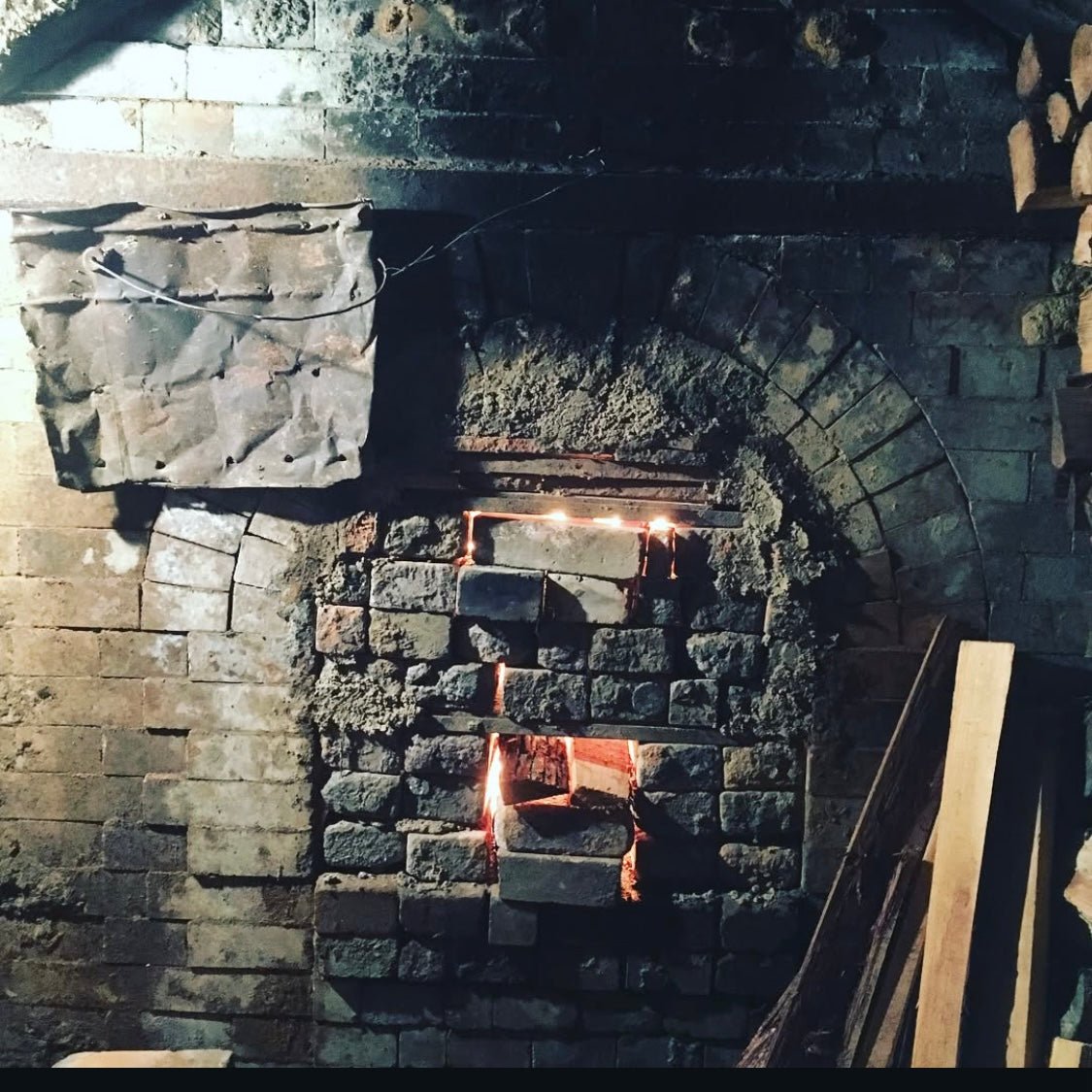
In Shizuoka, we visited Wada Choji Shoten, a tea wholesaler founded in 1950, where we met Natsuki Wada, the third generation to lead the family business. In 2024, Wada won first place in the individual category at the 71st National Tea Appraisal Skills Competition, making him one of Japan’s most accomplished tea appraisers. At Wada Choji Shoten, he also continues the traditional practice of hiire—the final firing of tea—using charcoal, a method that has become extremely rare today.
During our visit, Wada took us to meet gyokuro producer Noboru Endo. Spending time with the two of them made me think differently about what it means to sell tea.

( Mr Noboru Endo)
Shizuoka is one of Japan’s most important tea-producing regions, with a history of tea cultivation stretching back to the 13th century. At the time, tencha (the tea leaves used to make matcha) was among the teas produced in Japan. By the mid-18th century, techniques for producing sencha had been developed in Japan, and sencha gradually became widely enjoyed. About a century later, in the mid-19th century, gyokuro, a distinctly Japanese style of shaded green tea, was developed. By then, Shizuoka had already become one of the country’s major tea-producing regions.
Wada Choji Shoten is what is known in Japan as a seicha tonya, or tea wholesaler and finisher. But what exactly does that mean?
In early May, as the new season’s tea begins to emerge, farmers harvest the tender young leaves. The leaves are quickly steamed at high temperatures to stop enzymatic activity and prevent oxidation. They are then rolled and dried. The tea at this stage is called aracha, or “unfinished tea.” Everything that happens before reaching this point already has an enormous influence on how the tea will eventually taste, and it requires years of skill and experience. Aracha still contains stems, veins, fine particles and leaves of varying sizes. It is, essentially, the tea before it becomes the finished product we are accustomed to seeing.
A tea wholesaler like Wada Choji Shoten purchases aracha from tea markets, brokers and farmers. The tea is then sorted, stems and other material are separated, and the leaves are graded by size. Finally comes hiire, a controlled process of heating and drying that brings out the tea’s aroma and flavour. In other words, the tea wholesaler takes what the farmer has grown and produced, learns to understand the individual character of each tea, and carefully brings out its final flavour and aroma before sending it out into the world.
At Wada Choji Shoten, this final firing is still done using charcoal—a traditional method that very few tea wholesalers continue today. There is a space called the haikenba, where newly acquired teas are examined under natural light. Here, Wada studies the character of each leaf, considers possible blends, and thinks about how the firing should be adjusted.
Watching him work felt like watching a craftsman in his studio. His work is rooted in years of knowledge and experience, but there is also something deeply creative about it. Standing there and watching him, I found myself thinking about a pottery studio. There was something very familiar in the way experience, the senses and creativity all came together.

(Natsuki Wada in the haikenba at Wada Choji Shoten)
While we were in Shizuoka, Wada took us to visit the tea fields of gyokuro producer Noboru Endo. We happened to arrive during the harvest of shincha, the first tea of the season—one of the busiest and most intense times of the entire year. At this time of year, Endo sleeps very little, and every hour matters. He normally does not accept visitors during the harvest, but because we had come through Wada, he kindly made time for us and welcomed us into his fields.
Endo’s tea fields are in the Asahina area of Okabe, Fujieda, one of Japan’s most renowned regions for gyokuro production. He is the third generation of his family to grow tea there. His gyokuro is highly regarded. He checks the tender new leaves by touch, and they are carefully harvested by hand. Over many years, Endo has become known as a true master of his craft.
When he entered the family business around fifty years ago, there were more than 100 gyokuro-producing farms in the area. Today, because of an aging population and a lack of successors, he told us that only eight remain. Endo, now in his seventies, laughed as he told us:
“I’m still considered one of the young ones.”
That stayed with me.
I had always known that gyokuro was considered one of Japan’s finest teas. And yet, I had almost never had the opportunity to drink it. For me, it somehow felt even more distant than matcha.

(Noboru Endo’s gyokuro tea field)
When I lived in Japan, “tea” in everyday life was much more likely to mean a bottled tea bought at a convenience store or supermarket. I worked as a potter and had always been interested in tea, but I did not have a single friend who regularly drank Japanese loose-leaf tea, let alone gyokuro.
Today, the tea industry is experiencing an unprecedented global matcha boom. Some producers who previously made other types of green tea are moving away from them and converting their production to tencha (the tea leaves used to make matcha). As a result, the supply of other Japanese green teas has tightened, and prices for teas such as sencha and hojicha have also risen. At the same time, although not to the same extent as matcha, interest in other Japanese teas is growing in North America and Europe.
Meanwhile, in Japan, where people have already been moving away from traditional loose-leaf tea for many years, there is concern that rising prices could create even more distance between Japanese tea and the people who once drank it as part of everyday life.
Against this backdrop, Endo pointed toward the top of the mountain on the other side of the valley.
“I’m thinking of making a new tea field up there next.”
He said it so simply, as if he were just talking about his next project. But knowing everything that was happening around gyokuro production, I was struck by the fact that he was still looking ahead.
Endo is also working to pass his knowledge on to the next generation of tea producers. A younger farmer nearby, who recently began growing tea, comes to see him almost every day to learn from his experience. Endo seemed genuinely happy as he told us about him.
He also joked, “I’d make more money producing tencha, but Wada keeps asking me, ‘Please, keep making gyokuro for me,’ so I guess I have no choice.”
Wada replied, “Endo’s gyokuro is the best. I really want him to keep making it.”
There was something warm in the way they spoke to each other. Listening to them, you could sense the trust between them and their shared desire to continue making truly good tea.
In recent years, Wada has also been exploring aged gyokuro, looking for new possibilities within the tea. Gyokuro, as well as lightly steamed Japanese green teas, can develop with time, becoming rounder and more mellow in a way that can be compared to the evolution of wine. We had the opportunity to taste a gyokuro from 2022. With time, much of its fresh, grassy character had softened, leaving a noticeably rounder and more mellow cup.
Both Wada and Endo spoke very calmly about the changes they had witnessed over the past several decades. But to me, the idea that the number of gyokuro farms in the area had fallen from more than 100 to only eight in roughly fifty years was difficult to comprehend. Endo has continued making tea for more than half a century, through challenges I can only imagine. And still, he talks about creating another field on the mountain and shares what he has learned with younger producers.
I was deeply moved by his passion and by the fact that, after all these years, he is still looking ahead.
Wada never said this to me directly, and this is only what I felt after spending time with the two of them, but I came away with the sense that he wants to help preserve Endo’s knowledge and skills.
It is true that, in the midst of today’s matcha boom, producing tencha may offer greater financial opportunities. It may also give a younger generation of farmers new reasons to enter the industry and perhaps help address the problem of succession. But once a skill disappears, bringing it back is incredibly difficult.
Farming in particular depends on so much that cannot be captured by scientific data alone. There is knowledge held in the hands and senses—experience, intuition and understanding built up over decades. Once that kind of knowledge disappears, some of it may never be recovered.
I never felt that Wada was asking Endo to carry this burden alone. Rather, watching the two of them together, I felt that they were walking forward side by side.
Throughout this journey, we met many people whose lives and work revolve around tea. They are working in increasingly difficult conditions, including the challenges brought by a changing climate. And yet, again and again, we met creative people with a deep sense of craftsmanship who simply want to keep making good tea and carry it forward.
There are those who grow the tea, those who understand the leaves and bring out their final character, and those who carry the finished tea to the next person.
Perhaps preserving good tea is not simply about protecting something because it is old. It is about understanding the knowledge, experience and skills behind it, and finding a way to pass them on to the next person.
This journey reminded me that selling tea is not simply about selling a product. By sharing the work these craftspeople have created, we can play a small part in carrying their knowledge, their intentions, and the path they have built a little further forward.
Words by Satoshi Yoshikawa
English translation with assistance from ChatGPT